Imagine stepping into a living room that feels like a breath of fresh air. Minimalist design isn’t just a trend; it’s a lifestyle choice that brings calm and clarity to chaotic lives. With the right touches, a minimalist living room can transform into a serene sanctuary where clutter doesn’t stand a chance.
But don’t worry, minimalist living isn’t all about stark white walls and a single chair that looks like it’s auditioning for a role in a sci-fi movie. It’s about creating a space that’s functional yet stylish, where every piece has a purpose and a story. So if you’re ready to ditch the excess and embrace simplicity with a dash of personality, these minimalist living room design ideas will inspire you to create a space that’s not just beautiful, but also a joy to live in.
Understanding Minimalist Living Room Design
Minimalist living room design centers on reducing clutter while prioritizing functionality and aesthetics. Embracing this approach fosters tranquility and allows for personal expression.
Key Principles of Minimalism
Simplicity stands as the foundation of minimalist design. Clean lines create a sense of order, while neutral color palettes enhance openness. Functionality drives choices; every piece of furniture serves a purpose. It’s about selecting items calmly and intentionally. Spaciousness plays a vital role; open layouts create breathing room. Natural light helps to elevate the atmosphere, making spaces feel larger. Lastly, incorporating personal touches infuses warmth, ensuring living areas don’t feel sterile.
Benefits of Minimalist Design
Reduced clutter enhances mental clarity, contributing to a peaceful environment. Minimalist designs demand less maintenance, allowing for effortless upkeep. Cost efficiency often emerges as a benefit, as fewer items lead to lower overall spending. Sustainability thrives in minimalism, favoring quality over quantity and encouraging eco-friendly choices. Social interactions can flourish in open spaces, promoting connections among residents. Minimalist environments often reflect individual personality, showcasing unique tastes through carefully selected pieces.
Essential Elements of Minimalist Living Rooms
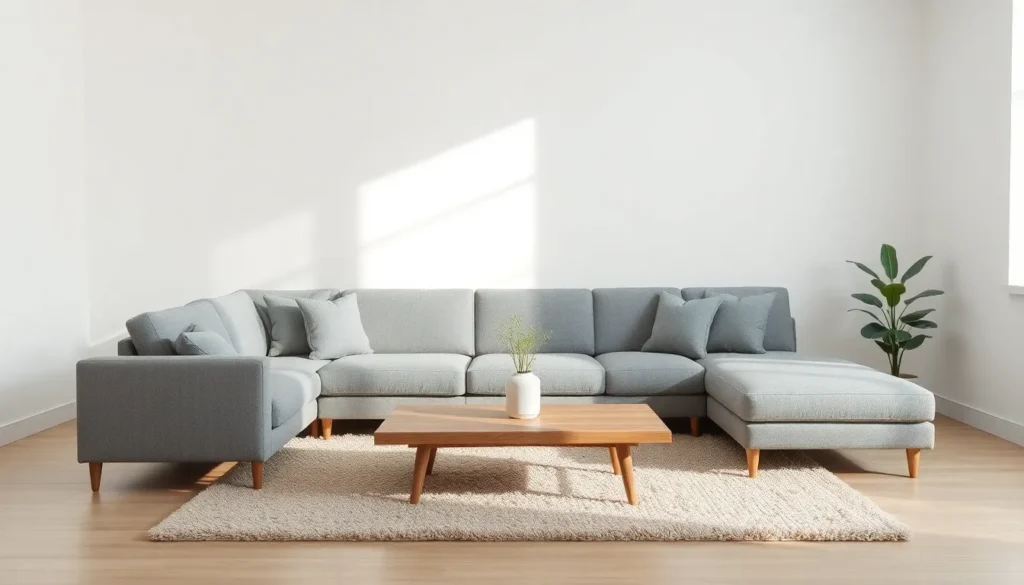
Minimalist living rooms emphasize simplicity and functionality. Key aspects contribute to the creation of serene spaces.
Furniture Selection
Selecting furniture plays a crucial role in achieving a minimalist design. Prioritize pieces that deliver both form and function. Furnishings such as a sleek sofa or a simple coffee table can keep the aesthetic clean. Choosing items with multipurpose use, like storage ottomans, enhances utility. Avoid overcrowding the space; leave enough room for movement. Focus on unique shapes and textures to draw attention without overwhelming.
Color Palette
Applying a neutral color palette enhances the spacious feel of a minimalist living room. Whites, grays, and beiges create a calming environment. Incorporating textural elements, like a plush rug or soft throw, adds warmth to these tones. Introduce subtle accents through small decor items or plants, injecting personality. Limit color choices to maintain a cohesive look and avoid distractions. Creating contrast through darker shades can elevate the depth of the room without complicating the design.
Creative Minimalist Living Room Design Ideas
Minimalist living room designs encourage creativity while maintaining simplicity. These ideas focus on functionality, style, and a tranquil atmosphere.
Open Space Concepts
Open space concepts maximize natural light and airflow. They create a sense of freedom, making rooms feel expansive. Utilizing large windows or sliding glass doors enhances this effect. Incorporating a consistent flow between the living area and adjacent rooms encourages seamless movement. Maintaining fewer decorative partitions fosters visual continuity, while selecting lighter furniture pieces complements the open aesthetic. Minimalist decor often allows for varied textures, which add depth without clutter. Plants can introduce life while reinforcing the natural feel of open spaces.
Multi-Functional Furniture
Multi-functional furniture plays a crucial role in minimalist living rooms. Items such as storage ottomans or convertible sofas enhance functionality while preserving simplicity. Choosing a coffee table with hidden storage helps maintain a tidy environment. A daybed serves both as seating during the day and a bed at night. Prioritizing quality over quantity ensures that every piece contributes to the overall design. Simple designs with clean lines prevent visual distraction and make spaces more inviting. Versatile furniture can adapt to different needs, allowing for effective use of space without compromising aesthetic appeal.
Tips for Achieving a Minimalist Aesthetic
Minimalist aesthetic thrives on simplicity and functionality. Achieving this look requires intentional design choices.
Decluttering Your Space
Decluttering transforms a chaotic environment into a serene oasis. Start by evaluating each item in the living room and asking whether it truly adds value. Discard or donate items that no longer serve a purpose. Consider storage solutions that keep essentials organized and out of sight. Utilize decorative baskets or built-in shelving to hide clutter while maintaining accessibility. Prioritize open surfaces that invite calmness and tranquility. Remember, a clear space fosters a clearer mindset, enhancing the overall minimalist experience.
Incorporating Natural Light
Natural light plays a crucial role in minimalist design. Large windows maximize sunlight, creating an open and airy feel. Consider window treatments that allow light to flow freely while providing privacy. Choose light-colored walls to reflect sunlight and amplify brightness. Position mirrors strategically to reflect light and enhance the sense of space. Embrace simplicity by keeping window sills clear of decorations, emphasizing the importance of light in achieving a serene atmosphere. Utilizing natural light not only elevates aesthetics but also contributes to overall well-being.
Embracing minimalist living room design can transform any space into a serene retreat. By focusing on simplicity and functionality, individuals can create environments that reflect their personal style while promoting mental clarity. The thoughtful selection of furniture and decor plays a crucial role in achieving this balance.
Incorporating multifunctional pieces and maintaining a neutral color palette fosters an inviting atmosphere. With the right approach to decluttering and maximizing natural light, a minimalist living room becomes a harmonious space that encourages relaxation and creativity. Adopting these principles not only enhances the aesthetic appeal but also enriches daily living, making every moment spent in the room more enjoyable.